Who Are the Top Digital Display Screen Suppliers in China?
China has become a major manufacturing base for the global digital display screen industry. Its suppliers serve retail stores, transport hubs, stadiums, control rooms, and public spaces. Yet “top” does not always mean the largest factory or the lowest quotation.
This guide examines leading Chinese suppliers, including Leyard, Unilumin, Absen, LianTronics, Hikvision, and QSTECH. It compares their product strengths, pixel technologies, production capacity, software support, certifications, and international service networks. These factors matter when a screen must operate for long hours under bright sunlight, indoor lighting, humidity, or changing temperatures.
Alan Brawn, a recognized digital signage consultant, has said, “Digital signage is not television; it is a communications medium.” That distinction should shape every supplier decision. A reliable digital display screen must present readable content, stable colors, consistent brightness, and manageable maintenance. Hardware alone is not enough.
Real projects often reveal the difference. A shopping mall may need fine-pitch LED walls with quiet cooling. An airport may prioritize redundancy, monitoring, and rapid replacement. A retail chain may value centralized content management more than maximum brightness. The best supplier depends on these practical conditions.
Some comparisons remain imperfect. Public rankings rarely use identical data, and supplier claims can be difficult to verify. Buyers should request project references, test samples, warranty terms, spare-parts plans, and measured performance results. Price still matters, but a cheaper screen can create higher costs through downtime, calibration problems, or slow technical support.
This article offers a careful starting point for identifying China’s strongest digital display screen suppliers and matching their capabilities with real operating needs.
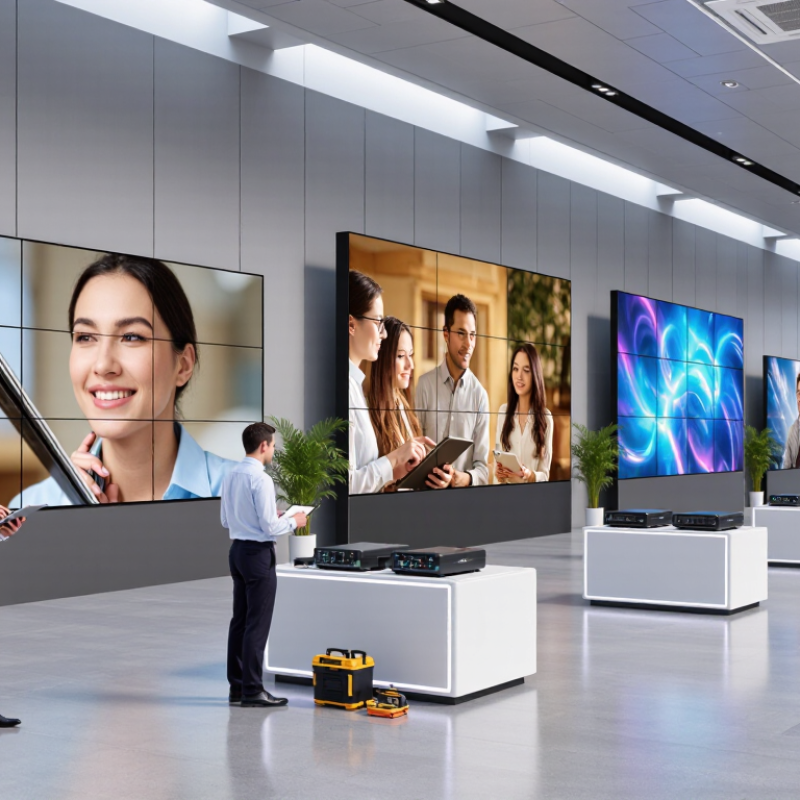
Definition and Role of Digital Display Screen Suppliers in China
Digital display screen suppliers in China are more than manufacturers of panels. They design, assemble, test, and support systems for retail, transport, education, hospitality, and control rooms. Their products may include LED walls, LCD video walls, kiosks, outdoor billboards, and integrated content systems. In practical terms, a supplier connects hardware with brightness control, remote monitoring, mounting structures, and after-sales service.
Not just factories.
According to MarketsandMarkets, the global digital signage market was valued at about USD 27 billion in 2024 and may exceed USD 40 billion by 2029. This growth increases demand for suppliers that can manage both production and deployment. A reliable Chinese supplier should provide measurable brightness, pixel-pitch data, color calibration records, thermal testing, and realistic warranty terms. Factory audits, sample testing, and documented quality procedures remain useful evidence of competence.
The strongest suppliers usually support customization, export packaging, installation guidance, and spare-part planning. They may also help buyers reduce power consumption through automatic brightness adjustment. The U.S. Department of Energy notes that efficient lighting controls can significantly reduce commercial energy use, although screen performance varies by site and operating schedule. That matters in a bright airport or a dusty roadside location. A low quotation is not proof of value. Delivery delays, weak software support, and inconsistent modules can erase the initial saving. My assessment is imperfect: published market reports often combine different display technologies, so buyers should verify every specification through independent testing and live demonstrations.
Key Types of Digital Display Screens Available from Chinese Suppliers
Chinese suppliers offer several digital display screen types, each suited to a different viewing distance and installation environment. Fine-pitch LED screens deliver seamless images in control rooms, retail interiors, and conference spaces. Outdoor LED displays use high-brightness modules and weather-resistant cabinets. LCD video walls provide sharp text and stable color for command centers, although their bezels remain visible.
Interactive flat panels combine touch input, wireless presentation, and built-in computing. They are common in classrooms, meeting rooms, and training centers. Transparent LED screens create visual content across glass storefronts while preserving daylight. E-paper signage uses very little energy and works well for price labels, transport notices, and indoor information boards. The choice is not always obvious.
MarketsandMarkets valued the global digital signage market at about USD 27.1 billion in 2024 and forecasts continued double-digit growth through 2029. Its analysis highlights retail, transportation, corporate, and hospitality as important application sectors. Omdia’s LED Video Displays research also tracks strong demand for fine-pitch products, driven by smaller pixel spacing and improving image quality.
Buyers should examine brightness, pixel pitch, viewing distance, refresh rate, heat management, and service access. A low-cost panel can become expensive after repeated module failures. Supplier reliability matters as much as specification sheets. Certifications, factory quality controls, spare-parts planning, and realistic warranty terms deserve direct verification. Some product claims look impressive but perform differently under sunlight, dust, or continuous operation. Testing a complete cabinet before purchase remains a sensible step.
Leading Digital Display Screen Suppliers and Their Core Strengths
China’s digital display screen suppliers serve retail, transport, events, and control rooms worldwide.
Their strongest advantage is manufacturing depth. According to Grand View Research, the global digital signage market was valued at about USD 31 billion in 2023. It is expected to grow steadily through 2030. This demand rewards suppliers that can deliver stable quality, not only low prices.
Experienced suppliers usually specialize in different strengths. Some focus on fine-pitch LED panels for indoor command centers and premium retail walls. Others produce high-brightness outdoor displays with weather protection, reinforced cabinets, and easier maintenance. MarketsandMarkets projects the LED display market to expand significantly between 2024 and 2029, increasing pressure on suppliers to improve energy efficiency and serviceability. Strong manufacturers test color uniformity, refresh rate, thermal performance, and cabinet alignment before shipment.
That matters.
Reliable sourcing requires more than reviewing a product catalog. Ask for production samples, aging-test records, pixel-failure data, and installation references in similar climates. Check whether the supplier can provide spare modules, remote diagnostics, and clear warranty terms. A lower quotation may hide weaker calibration or slower support.
No supplier is perfect.
Even advanced factories can miss small issues during mass production. Buyers should therefore inspect random units, verify compliance documents, and record acceptance standards before signing. Field experience often reveals more than polished sales presentations.
How to Evaluate Quality, Technology, and Manufacturing Capabilities
Who Are the Top Digital Display Screen Suppliers in China?
Evaluating a digital display supplier requires more than comparing quotations. During factory visits, inspect cabinet seams, module alignment, and cable labeling. Uneven gaps often reveal weak assembly control. Ask for measured brightness, refresh rate, grayscale performance, and color uniformity. Do not rely only on showroom images. Request recent test reports and samples from regular production.
Technology should match the application. Outdoor screens need verified weather protection, thermal management, and stable brightness control. Indoor fine-pitch displays require close viewing tests, low noise, and precise calibration. Ask whether the supplier designs control systems in-house or depends entirely on third parties. Manufacturing capability also matters. Review SMT equipment, aging rooms, spare-part storage, and quality records. Traceable serial numbers make future service less uncertain. A polished factory can still hide process gaps. I once placed too much confidence in presentation quality. That was a useful warning.
Tips: Visit the production line if possible. Check how rejected modules are recorded. Request a small pilot order before approving volume production. Compare screen performance after continuous operation, not only after installation. Ask for clear warranty terms, response times, and packaging standards. Confirm that critical components have stable alternatives. Cheap substitutions may appear only months later. Finally, evaluate communication during a technical dispute. Reliable suppliers explain problems with data, not vague promises.
Factors to Consider When Choosing a Chinese Display Screen Supplier
Choosing a Chinese digital display screen supplier requires more than comparing price lists. According to TrendForce’s 2024 LED Display Market report, fine-pitch LED demand is expanding as control rooms, retail spaces, and corporate venues upgrade visual systems. This growth creates many capable factories, but quality can vary. Review the supplier’s manufacturing experience, engineering team, and completed projects. Ask for recent installation photos, test reports, and customer references. A factory tour, even by video, can reveal production discipline.
Technical fit matters. Check brightness, viewing distance, refresh rate, color consistency, heat control, and power consumption. For outdoor screens, confirm weather protection and cabinet sealing. Request independent testing for applicable safety and electromagnetic requirements. ISO 9001 certification is useful, but it does not replace product testing. The International Data Corporation has repeatedly highlighted service reliability and lifecycle support as important technology purchasing factors. A low quotation may hide spare-part delays, weak calibration, or unclear warranty terms.
Tips: Request a sample first. Test it for seven days. Measure brightness and temperature. Read the warranty carefully. Confirm replacement-part availability and response times. I have seen buyers focus on pixel pitch and ignore installation access. That mistake becomes expensive. Also, do not trust impressive factory videos alone; audit documents, sample performance, and after-sales procedures together. A supplier who explains technical limits honestly may be safer than one promising perfect performance.