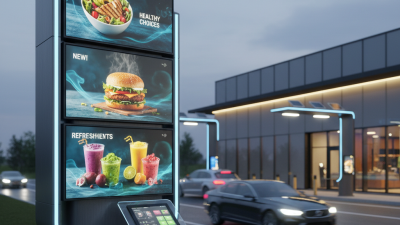
Choosing the best digital display screen for global buyers is not a simple specification exercise. It requires practical testing, clear technical knowledge, and attention to regional conditions. A screen that performs well in a controlled showroom may struggle beside a bright street, inside a dusty warehouse, or during long shipping periods.
Brightness matters. Viewing distance, ambient light, resolution, refresh rate, and operating temperature all affect real performance. Buyers should also examine power consumption, enclosure protection, mounting options, and service access. For example, a retail display near a sunny entrance may need stronger brightness and automatic adjustment. A conference-room screen may need accurate color and quiet operation instead.
Reliability depends on more than the panel itself. Check the manufacturer’s quality controls, warranty terms, replacement-part availability, and technical support response. Ask for test reports and confirm whether specifications match the delivered model. Regional voltage, communication standards, language settings, and installation requirements also deserve careful review. These details can prevent expensive delays after arrival.
There is no universal winner. An experienced buyer should compare total ownership cost, not only the purchase price. That cost includes freight, installation, energy use, calibration, maintenance, and eventual replacement. I have seen attractive low-cost options become difficult to support overseas. That is an uncomfortable lesson, but an important one.
The strongest choice balances image quality, durability, usability, and accountable service. Independent testing remains valuable. Marketing claims should never replace evidence. This guide will examine the main screen types, practical selection criteria, and supplier questions that help global buyers make a more confident decision.
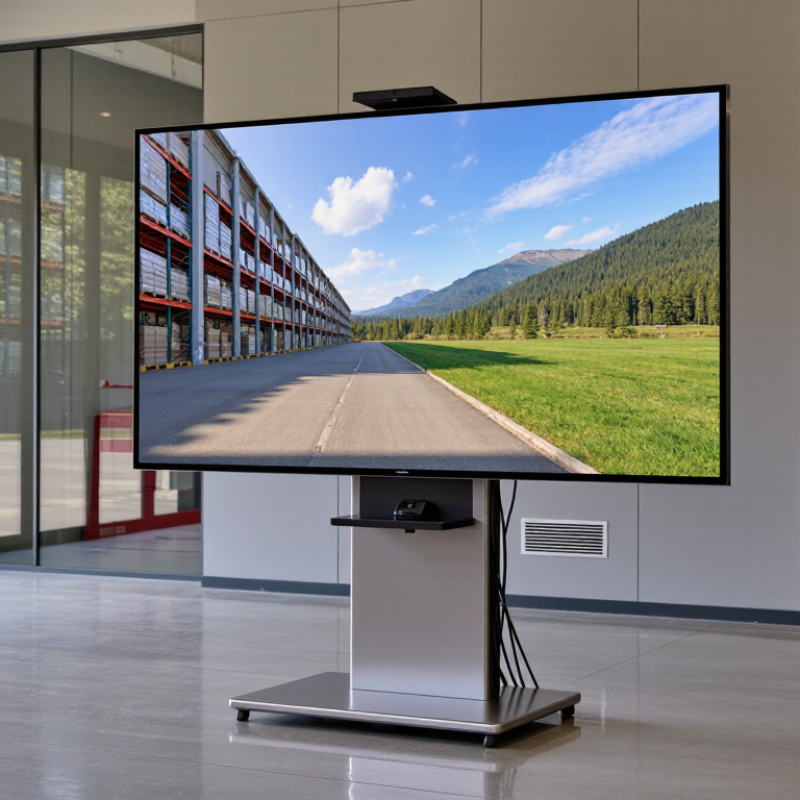
What Is the Best Digital Display Screen for Global Buyers?
LCD remains the practical choice for offices, retail counters, and public information systems. It uses a backlight, so black levels are weaker than OLED. However, mature production keeps pricing predictable. Omdia’s 2024 display research indicates LCD still represents more than 90% of global TV panel shipments. That scale supports easier replacement and wider availability.
Direct-view LED serves large walls, stadiums, transport hubs, and outdoor signage. It combines many small light-emitting diodes into one visible surface. Buyers should check pixel pitch, brightness, viewing distance, and service access. A 2.5-millimeter pitch may look sharp indoors, but it wastes budget across a distant roadside screen. OLED produces deeper blacks because each pixel emits its own light. DSCC’s 2024 OLED market reporting shows continued expansion across mobile and larger-screen applications. Still, static logos can create uneven aging. That risk is often underestimated.
MicroLED offers inorganic pixels, high brightness, strong contrast, and potentially longer operating life. IDTechEx’s 2024 market analysis projects the microLED display sector to exceed 5 billion dollars by 2034. The forecast is attractive, but manufacturing yield remains difficult. Tiny pixel defects can increase inspection and replacement costs. My procurement tests would include sunlight readability, heat behavior, color uniformity, and 72-hour static-image trials. Numbers alone do not reveal installation problems. The best screen depends on distance, duty cycle, climate, maintenance skills, and total ownership cost. A specification sheet can still mislead.
| Comparison Dimension | LCD | LED | OLED | MicroLED |
|---|---|---|---|---|
| Basic Technology | Liquid-crystal panel using a separate backlight, commonly LED-based. | Usually refers to an LED-backlit LCD; in signage, it can also mean a direct-view LED display made from light-emitting diodes. | Organic pixels emit their own light, so no separate backlight is required. | Displays use microscopic inorganic LEDs as individually controlled, self-emissive pixels. |
| Typical Screen Sizes | Approximately 10–98 inches for commercial and consumer panels. | Approximately 10 inches to very large direct-view installations exceeding 100 inches. | Approximately 42–97 inches for commercially common large-format panels. | Currently most common in premium large-format displays; sizes and availability vary significantly by supplier. |
| Native Resolution Options | HD, Full HD, 4K UHD, and 8K UHD are widely available depending on size and application. | LED-backlit LCD models commonly offer Full HD, 4K UHD, or 8K UHD; direct-view LED resolution depends on pixel pitch and cabinet size. | Full HD, 4K UHD, and some 8K UHD configurations are available. | High-definition and 4K-class configurations are available, with product choices still more limited than LCD or OLED. |
| Black Level and Contrast | Good to very good, depending on the panel type and local-dimming system; blacks may appear gray in dark scenes. | LED-backlit LCD performance ranges from good to very good; direct-view LED can achieve strong contrast in controlled conditions. | Excellent; each pixel can switch off for near-perfect black and very high perceived contrast. | Excellent; self-emissive pixels can deliver deep blacks and very high contrast without an organic layer. |
| Brightness Capability | Common commercial models range from roughly 300 to 1,500 nits, depending on specification. | LED-backlit LCD models commonly range from roughly 300 to 2,500 nits; direct-view LED can be configured for very high brightness. | Commonly about 500 to 1,000 nits for sustained full-screen brightness, with higher short-duration highlights on some models. | Potentially very high brightness, often above OLED levels; actual output depends on pixel pitch, thermal design, and configuration. |
| Viewing Angle | Ranges from moderate to wide; IPS-type panels generally provide wider viewing angles than common VA-type panels. | LED-backlit LCD viewing angle depends on the underlying LCD panel; direct-view LED can provide wide angles with suitable LED packages. | Very wide viewing angles with relatively consistent color and contrast. | Very wide viewing angles with strong color and contrast consistency. |
| Motion Performance | Good for most business, education, retail, and digital-signage applications; response time varies by panel design. | Good to excellent; direct-view LED can support high refresh rates when properly configured. | Excellent pixel response and low motion blur, making it suitable for fast-moving content. | Excellent response performance and high refresh-rate potential for premium visual applications. |
| Risk of Image Retention | Low under normal use. | Low for LED-backlit LCD; direct-view LED also has low burn-in risk, although component aging can occur. | Higher long-term burn-in or permanent image-retention risk when static content is displayed repeatedly at high brightness. | Very low burn-in risk compared with OLED because the LEDs are inorganic, although brightness aging can still occur. |
| Expected Service Life | Commonly around 30,000–60,000 hours, depending on backlight, operating conditions, and brightness setting. | Commonly around 30,000–100,000 hours; direct-view LED lifetime depends on diode quality, drive conditions, and thermal management. | Often specified around 30,000–100,000 hours to a reduced-brightness threshold; service life depends strongly on usage and brightness. | Potentially 50,000–100,000 hours or more to a reduced-brightness threshold, depending on design and operating conditions. |
| Energy Efficiency | Generally good, especially at moderate brightness; power use varies with screen size and backlight level. | LED-backlit LCD is generally efficient; direct-view LED power consumption increases with brightness, pixel density, and white content. | Can be efficient with dark content, but bright white content may require substantial power. | Potentially efficient for high-brightness applications, but actual consumption depends on pixel density, brightness, and content. |
| Outdoor Suitability | Limited unless specifically engineered with high brightness, weather protection, and thermal management. | Strong choice for outdoor signage when using a purpose-built direct-view LED system with suitable IP protection. | Generally less suitable for direct sunlight and harsh outdoor environments because of brightness, heat, and durability constraints. | Promising for premium outdoor applications, but availability, cost, serviceability, and environmental protection must be assessed carefully. |
| Installation Flexibility | Suitable for wall mounting, kiosks, video walls, and commercial displays; larger units can be heavy. | Highly flexible, especially for modular direct-view LED walls, curved displays, large venues, and custom aspect ratios. | Thin and lightweight for many indoor installations; curved formats may be available. | Suitable for premium large-format installations, but module availability and installation expertise may be limited. |
| Typical Purchase Cost | , depending on whether it is LED-backlit LCD or direct-view LED. | |||
| Maintenance Considerations | Usually straightforward; panel or backlight replacement may be more practical than component-level repair. | LED-backlit LCD maintenance is similar to LCD; direct-view LED systems require module, power-supply, and control-system servicing. | Panel replacement can be costly, and burn-in prevention policies are important for static-content applications. | Requires specialized modules, calibration tools, spare parts, and trained technicians; logistics should be planned before purchase. |
| Best-Fit Applications | Office displays, classrooms, meeting rooms, retail screens, public information, and cost-sensitive signage. | Indoor and outdoor signage, transportation hubs, sports venues, large video walls, retail advertising, and high-brightness environments. | Premium home entertainment, hospitality, design-focused retail, control rooms, and applications requiring deep blacks. | Luxury hospitality, flagship retail, broadcast studios, premium corporate spaces, immersive venues, and long-life high-end installations. |
| Best Choice for Global Buyers | Best value: choose LCD when budget, broad availability, easy replacement, and general-purpose performance are priorities. | Best for scale and brightness: choose direct-view LED for large, bright, modular, or outdoor installations; verify that the specification is not simply LED-backlit LCD. | Best for image quality: choose OLED when near-perfect blacks, thin design, and wide viewing angles outweigh burn-in and brightness considerations. | Best premium option: choose MicroLED when maximum contrast, high brightness, low burn-in risk, and long-term premium performance justify the highest investment. |
Note: Specifications are representative industry ranges rather than fixed standards. Actual performance, lifetime, energy use, weather resistance, and total cost of ownership vary by screen size, pixel density, brightness setting, operating hours, installation environment, and supplier configuration.