How to Choose the Right Silicone Seal for Global Sourcing?

Choosing the right Silicone Seal for global sourcing involves more than comparing unit prices. The seal must match the application, material, production process, and delivery environment. A gasket used around a kitchen appliance faces different demands from one installed in an industrial pump.

Experienced sourcing teams examine temperature range, chemical exposure, compression recovery, hardness, and dimensional tolerance. They also inspect the contact surface. A rough flange can damage a soft seal. Excessive compression can cause early deformation. Small details matter.

Ask suppliers for technical data sheets, material declarations, test reports, and representative samples. Confirm whether the compound is suitable for food contact, medical use, outdoor exposure, or high-temperature service. Requirements vary by market and application. Independent testing can strengthen confidence when claims appear unclear.

Supplier evaluation should include factory capability, mold control, batch traceability, quality inspections, and corrective-action records. A reliable manufacturer should explain how it controls flash, burrs, color variation, and dimensional drift. Request samples from normal production, not only polished demonstration pieces.

Fit testing remains essential. Install the Silicone Seal on the actual mating parts, then check leakage, compression, and removal performance. Test after heat, humidity, pressure, or chemical exposure when relevant. Laboratory results do not always predict field behavior.

There is no universal “best” seal. That assumption can create expensive mistakes. Even a well-documented supplier may overlook a design detail. Review drawings carefully, challenge unclear specifications, and keep approval records. A disciplined sourcing process reduces risk while leaving room for practical judgment. Reliability is built through evidence, repeated verification, and honest review.
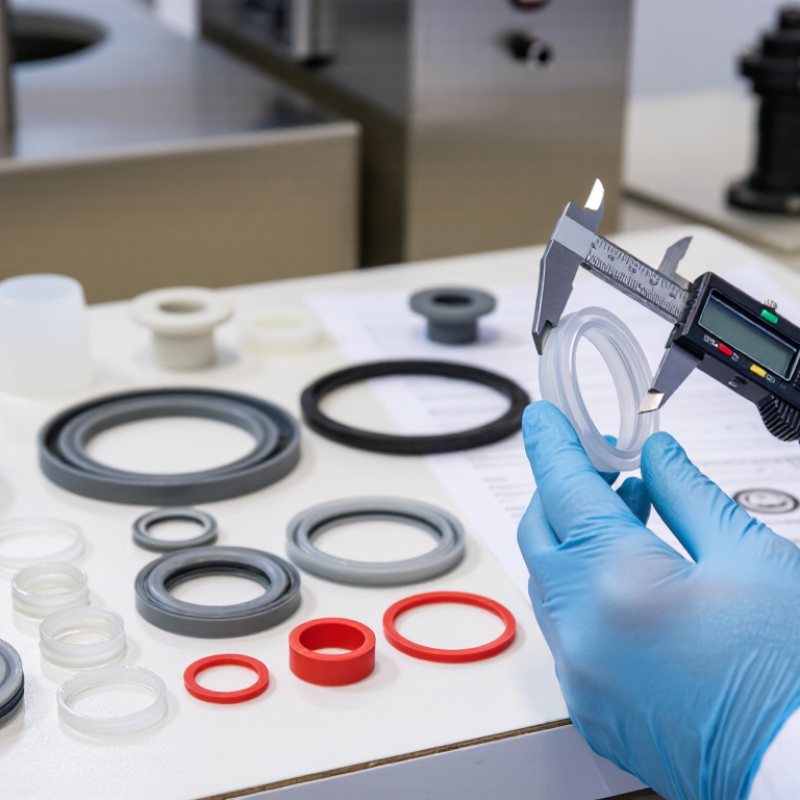
How to Choose the Right Silicone Seal for Global Sourcing?

Understanding Silicone Seal Types and Their Key Properties

Choosing a silicone seal starts with understanding its type and working conditions. O-rings suit circular grooves and moving joints. Flat gaskets work well between two fixed surfaces. U-channel seals protect edges, doors, and panels. Silicone cord can be joined into custom rings, but the joint needs careful inspection.

Material properties decide whether the design survives real use. Shore A hardness affects compression and flexibility. Softer silicone seals uneven surfaces better. Harder grades resist extrusion under pressure. Check operating temperature, compression set, tear strength, and chemical compatibility. Steam, oils, cleaning fluids, and sunlight can change performance. Small details matter.

I have seen seals fail because engineers checked temperature but ignored compression set. The seal looked fine. It slowly lost contact after repeated heating. A supplier should provide dimensional drawings, material data, batch traceability, and test samples. Compare samples under actual pressure and temperature, not only on a desktop. Measure groove width, seal diameter, surface finish, and compression percentage. A perfect drawing can still hide a poor fit. Global sourcing also requires clear tolerance notes and consistent inspection methods. Do not assume “silicone” means identical performance. Grades vary, and supplier descriptions can be incomplete. Ask direct questions. Verify the answers. Allow room for mistakes, because real assemblies rarely match the first calculation.

Matching Seal Materials to Temperature, Chemicals, and Pressure

How to Choose the Right Silicone Seal for Global Sourcing?

Matching Seal Materials to Temperature, Chemicals, and Pressure

A silicone seal should match the real operating environment, not only the catalog temperature range. Standard silicone often performs well across wide temperatures, but heat cycling can still cause hardening, shrinkage, or compression loss. Check both continuous and peak temperatures. Then review contact chemicals. Oils, fuels, concentrated solvents, and some cleaning agents may swell silicone or weaken its surface. Water, ozone, and many mild chemicals are usually less demanding, but testing remains important.

Pressure changes the design decision. High pressure can force a soft seal through a clearance gap, especially when hardness or groove dimensions are unsuitable. Consider seal hardness, extrusion gaps, compression, and the need for a backup ring. Tips: Request samples from multiple production lots. Test them at actual temperature, pressure, and chemical exposure. Record leakage, compression recovery, and visible swelling. Ask for material data, inspection records, and traceability documents. These details support dependable global purchasing.

A perfect drawing can still hide a practical problem. I have seen teams focus on heat resistance while overlooking assembly damage or poor surface finish. That mistake is easy to repeat. Silicone may also tear during installation when edges are sharp or lubrication is unsuitable. Confirm tolerances with the manufacturer, but verify them independently on received parts. Small differences in formulation can change performance. Lab data helps. Realistic testing matters more.

How to Choose the Right Silicone Seal for Global Sourcing? - Matching Seal Materials to Temperature, Chemicals, and Pressure

Comparative selection guide for common silicone seal material families. Actual performance depends on compound formulation, seal geometry, surface finish, installation, and operating conditions.
Material Family Typical Service Temperature Continuous Temperature Guidance Pressure Suitability Water, Ozone & UV Oils, Fuels & Hydrocarbons Steam & Hot Water Key Strengths Main Limitations Typical Applications
General-Purpose VMQ Silicone Approximately −60 to 200 °C Usually up to about 180–200 °C, depending on compound and exposure time Low–Medium
Best for static or low-pressure sealing; extrusion risk must be controlled
Excellent Poor
Not preferred for fuels, aromatic hydrocarbons, or petroleum oils
Limited
Can experience swelling or property loss in prolonged high-pressure steam
Very wide temperature range, flexibility, low-temperature elasticity, strong resistance to weathering and ozone Low tear strength, relatively high gas permeability, and weak resistance to fuels and concentrated chemicals Outdoor gaskets, appliance seals, lighting enclosures, weather seals, low-pressure static joints
High-Temperature VMQ Silicone Approximately −50 to 230 °C Often suitable for intermittent exposure near 230 °C; continuous limits vary by formulation Low–Medium
Pressure capability remains geometry-dependent despite higher temperature resistance
Excellent Poor
High temperature does not make standard silicone fuel-resistant
Limited
Confirm long-term steam-aging data before use
Improved resistance to thermal aging and compression set at elevated temperatures Higher cost than standard VMQ; may have reduced flexibility at low temperatures depending on formulation High-temperature oven gaskets, engine-area seals, heat shields, industrial thermal barriers
Fluorosilicone FVMQ Approximately −55 to 175 °C Commonly used around −50 to 175 °C; verify the specific compound for continuous duty Low–Medium
Suitable mainly for static sealing and carefully designed dynamic applications
Excellent Good–Excellent
Better resistance to fuels, mineral oils, and many hydrocarbon fluids than VMQ
Limited
Not a default choice for continuous high-pressure steam
Combines silicone temperature flexibility with improved fuel and oil resistance More expensive; resistance to strong acids, strong alkalis, and certain polar solvents must be checked individually Fuel-system gaskets, aerospace fluid seals, hydrocarbon-exposed connectors and diaphragms
Platinum-Cured VMQ Silicone Approximately −60 to 200 °C Similar thermal range to other VMQ grades; curing method does not alone define the temperature rating Low–Medium
Use the compound's mechanical and design data for pressure decisions
Excellent Poor
Platinum curing does not provide hydrocarbon resistance
Limited–Good
Can be suitable for clean hot-water service when the compound is specifically qualified
Low extractables, clean processing, and suitability for applications requiring high material purity Higher material cost; performance still depends on filler system, post-curing, hardness, and design Food-contact components, medical devices, laboratory equipment, clean-water systems
Peroxide-Cured VMQ Silicone Approximately −60 to 200 °C Commonly rated up to about 180–200 °C, subject to post-cure and compound specification Low–Medium
Appropriate for many general static seals when correctly sized
Excellent Poor
Use FVMQ or another elastomer when fuel resistance is required
Limited–Good
Qualification is required for continuous steam exposure
Broad availability, flexible hardness selection, and reliable general-purpose sealing performance Residual by-products may require post-curing for demanding clean-service applications Industrial gaskets, cable seals, covers, general-purpose O-rings and molded components
Low-Compression-Set Silicone Compound Approximately −50 to 200 °C Designed to retain sealing force over extended thermal cycling; confirm the specified test method Medium
Can improve long-term static sealing, but does not eliminate extrusion or blowout risk
Excellent Poor
Low compression set is not equivalent to oil or fuel resistance
Limited
Steam compatibility depends strongly on formulation and pressure
Improved sealing-force retention, thermal cycling performance, and resistance to permanent deformation Usually requires tighter control of compression, gland dimensions, and surface conditions Access-panel gaskets, enclosure seals, large static flanges, repeated thermal-cycle equipment
Selection note: Silicone seals generally perform best in clean air, water, ozone, weathering, and wide-temperature applications. For fuel, petroleum oil, or hydrocarbon exposure, fluorosilicone may be more suitable. Pressure ratings cannot be assigned from material type alone; confirm hardness, extrusion gap, gland fill, seal cross-section, surface finish, movement, and the manufacturer's validated test data before production sourcing.

Selecting the Right Seal Shape, Size, and Tolerance

Choosing a silicone seal for global sourcing begins with its shape. O-rings suit circular grooves, while custom profiles handle doors, panels, and irregular joints. A 2024 Grand View Research report estimates the global silicone elastomers market at about USD 7.4 billion in 2023. This scale reflects wide industrial use, but it does not make every seal interchangeable.

Measure the groove, not only the old seal. Record inner diameter, cross-section, compression, and stretch. A seal that looks correct may still leak after thermal expansion. ISO 3601-1 provides dimensional guidance for O-rings, while ISO 3302-1 helps define rubber product tolerances. For molded profiles, ask suppliers to state tolerances for every critical dimension. Tight tolerances can improve fit, yet they also increase tooling cost and inspection time. In practice, I have seen drawings demand ±0.05 mm without proving that the application needs it. That deserves review.

Tips: Request a cross-sectional drawing and material certificate. Confirm hardness, temperature range, media exposure, and compression set data. Test samples at expected temperatures, not only at room temperature. Leave room for honest uncertainty. Supplier data can vary between laboratories, and one test may not represent long-term field behavior. Use a first-article inspection before approving volume production. Small geometry errors often become large sealing problems.

Checking Global Standards, Certifications, and Supplier Quality

How to Choose the Right Silicone Seal for Global Sourcing?

Global sourcing requires more than comparing price and hardness. Silicone seals must match the application, destination market, and compliance requirements. Start by identifying temperature range, pressure, media exposure, and contact conditions. Then check relevant international standards, such as ISO 9001 for quality management or application-specific testing requirements. Standards do not automatically prove product suitability.

Request current certificates, test reports, and declarations of conformity from the supplier. Verify the issuing laboratory, test method, validity date, and product grade. Food-contact or medical applications may require additional documentation and controlled manufacturing records. In sourcing reviews, I have found that a certificate alone can mislead me. It may cover a different compound or an older production batch.

Tips: Ask for lot-specific inspection data. Check hardness, dimensions, tensile strength, compression set, and temperature resistance. Review traceability from raw material to shipment. A reliable supplier should explain change-control procedures, sampling plans, and corrective actions without hesitation. Arrange sample testing under real operating conditions, not only in a laboratory. Confirm packaging, storage limits, and shelf-life controls before approving a large order.

Supplier quality also depends on communication. Request clear drawings, tolerance records, and inspection photos for critical dimensions. An on-site or third-party audit can reveal weak process controls. Still, audits are only snapshots. Keep incoming inspections and periodic requalification in place. I sometimes underestimate packaging damage during long transport, so seal protection deserves its own inspection point.

How to Choose the Right Silicone Seal for Global Sourcing?

Suggested sourcing score allocation based on international standards, certification checks, and supplier quality controls

Prioritize material and regulatory compliance first, including applicable requirements such as ISO 9001, FDA 21 CFR 177.2600, EU food-contact rules, and REACH. Then verify dimensional consistency, traceability, testing capability, certification validity, and documented change-control procedures.

Comparing Costs, Logistics, and Long-Term Sourcing Reliability

How to Choose the Right Silicone Seal for Global Sourcing?

A low unit price can mislead. Silicone seals often need tooling, inspection, packaging, and replacement-cost calculations. Compare landed cost, not only the factory quotation. Include freight, duties, insurance, sampling, and expected rejection rates. The WTO’s Global Trade Outlook and Statistics 2024 projected merchandise trade growth of 2.6% in 2024 and 3.3% in 2025. Demand may recover, but transport capacity and regional freight rates can still change quickly. UNCTAD’s Review of Maritime Transport 2024 confirms that shipping carries over 80% of world trade by volume. A delayed container can cost more than a small material-price difference.

Reliability requires measurable evidence. Request silicone grade, hardness, temperature range, compression-set results, dimensional records, and batch traceability. For O-rings, ISO 3601 provides useful dimensional and acceptance guidance. For wider seal profiles, agree on drawings and test methods before production. The World Bank’s Logistics Performance Index 2023 highlights customs, tracking, infrastructure, and delivery timeliness as key logistics factors. Use those factors when comparing sourcing regions. A supplier with slightly higher pricing may offer stronger inspection records and shorter replenishment routes. That advantage is easy to overlook. I would not treat one successful sample as proof of long-term stability. Audit production consistency, review corrective-action records, and keep an approved backup source. Reliability is not a promise; it is repeated performance under documented conditions.